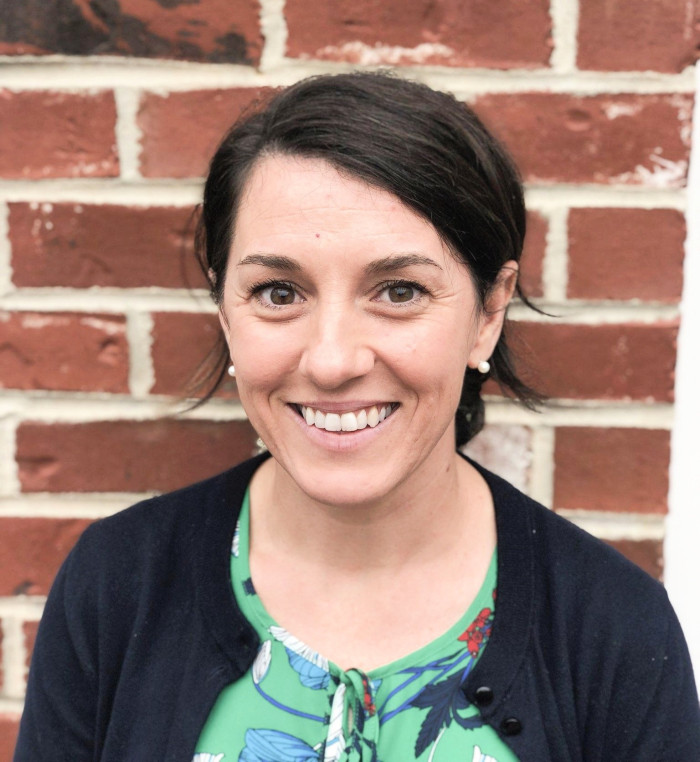
Caila Cater-Edwards, PEA’s Clean Energy Intern, sitting with Rachel Hutto. Rachel is a core part of Triad Compost Service, a food waste collection and industrial composting company established in 2011 with a current focus on diverting organic waste from landfills and distributing nutrient-rich "black gold" back into the local ecosystem. Triad Compost Service is a member of Piedmont Environmental Alliance’s Green Business Network.
CCE: Hello Rachel! Thank you so much for sitting with me to talk more about your green career and Triad Compost Service.
To kick things off, I’d love to help our readers visualize exactly how this works. Let’s follow a single everyday item, like a morning coffee filter or an apple core. From the exact moment your truck picks it up at a Triad home, what is the step-by-step journey it takes to transform into the 'black gold' that local community gardens and farmers fight over? And how does Triad Compost come into play for this process?
RH: Thanks for the question, Caila! It's true that unless you're working in the composting space, have managed a backyard compost pile, or are a waste geek like me, the process is mostly invisible. Which is too bad, because composting is really quite magical!
Once our team collects from a customer, the materials are transported along with other food scraps from homes, restaurants, schools and businesses across the Triad to our industrial composting site in Mocksville. Side note, TCS is what the industry would call a micro-hauler.
Once the materials are dumped and mixed and the trucks are washed - then nature and her microorganisms take over to break down the materials and the everyday magic really happens. It's amazing to me that these tiny organisms are powerful enough to heat a compost pile to temperatures that destroy weed seeds and pathogens and transform things like apple cores and coffee grounds into vital soil nutrients. Talk about wow! We do help though - our windrow composting process requires regular managing and monitoring.
What surprises many people is how long composting takes. Even at an industrial composting facility, it can take close to a year for raw organic material to be transformed into finished compost (AKA an end product that is ready to be reapplied back into the earth).
In sum, TCS is both a micro-hauler and a small industrial composter handling the same organic materials from "waste" to soil food. See what I mean - magical!
CCE: Composting truly is magical and a great reminder that our earth provides us everything we need! It’s also exciting to see more people wanting to learn about the composting process and how long it really takes to break down.
Thinking about this timeline, when that cycle is finally complete, how does Triad Compost Service distribute that finished compost back into the local ecosystem? We’d love to hear about the Triad farms or community gardens that are using it to grow the next generation of food.
RH: I love this question because it lets us highlight the "full circle" moment of composting with a local company.
Once the composting process is complete, we package our finished compost, Carolina Dynamite Compost, in 25-pound bags and distribute it throughout the community in a variety of ways. Interestingly, our residential subscribers are probably the biggest consumers of the finished product. Many use it in their vegetable gardens and flower gardens, closing the food loop right at home.
Our residential subscription includes 50 pounds of finished compost each year, and many customers choose to purchase additional bags at a reduced subscriber rate. We sell Carolina Dynamite Compost seasonally at the Cobblestone Farmers Market, and some customers visit our site in Mocksville to pick up call-ahead orders.
We also partner with local 501(c)(3) community gardens by donating compost to support their missions. Over the years, we've worked with groups like Keep Winston-Salem Beautiful, local Cooperative Extension offices, and other community organizations around the Triad. While it's true that our residential customers use a lot of the finished compost themselves, they also have the option to donate their annual allotment. In that way, our residential customers are helping supply compost to many of the community projects we support.
I think that's a pretty important part of the process to raise up. Together, we're using and creating a local resource that offers benefits for many layers of our local ecosystem.
CCE: How amazing! Moments like this, knowing that people are utilizing the entire process you all offer, gets me excited for our local food system. And, as someone who has been service driven, it is comforting to hear that both Triad Compost Service and your customers are giving back to the community in this way.
Reflecting on how much Triad Compost Service has grown since 2011, do you have any big dreams for the next chapter of the business? Do you know if there are plans to expand the footprint to more neighborhoods, or perhaps scale up your partnerships with local schools and larger commercial businesses?
RH: The short answer is: we certainly have the capacity to grow, and we're always glad to have conversations with folks who are interested in composting solutions for their homes, businesses, schools, or organizations to see if we're a good fit.
On the residential side, we'd really love to fill out our existing routes in the Winston-Salem and Greensboro areas. The more density we have on those routes, the more efficient and cost-effective the service becomes for everyone.
We know a composting service isn't the right fit for everyone—and that's OK. Some people enjoy composting at home, while others may not be in a position to participate right now. But we also know there are plenty of people who care deeply about our community, food system, and planet who haven't discovered us yet! These are folks who understand that diverting organic waste from landfills and improving soil health are crucial components of building a thriving future for us all.
Our bigger dream? I think it's pretty simple: we'd love to see composting become a normal part of life all across the Triad. Composting was much more commonplace in previous generations, but modern life doesn't always make it easy to reintegrate the practice into day to day lives. We love being a part of a modern solution that helps people participate in this worthy and timeless practice.
CCE: That is a wonderful note to end on. It’s easy to forget that composting isn't a new trend, but a foundational habit that we're just learning to reintegrate into busy, modern lives. For those 'folks who care deeply' but haven't found you yet, filling out those Winston-Salem and Greensboro routes sounds like the perfect next step.
Thank you for sharing your time and your vision with us today. To close us out, where can our readers go to find out if they're on your route, check out your services, or get in touch to see if they're a good fit?
RH: Sure thing! I appreciate the interest in our work we're at Triad Compost Service, and the renewed efforts PEA is making to support and uplift local green businesses.
Getting started is pretty straightforward. Readers can find everything they need to know at TriadCompostService.com, or reach out to us directly at TriadCompostService@gmail.com. We're also active on Facebook, Instagram, and LinkedIn.
We currently serve customers throughout Davie, Forsyth, and Guilford Counties, including communities like Clemmons, Lewisville, Winston-Salem, Kernersville, High Point, Greensboro, Summerfield, and surrounding areas. Our routes are always evolving as we add new customers, so if you're in the general area and interested in composting, don't hesitate to reach out. We'd be happy to talk through your options and see if we're a good fit.
And Caila, thank you for taking the time to have this conversation.