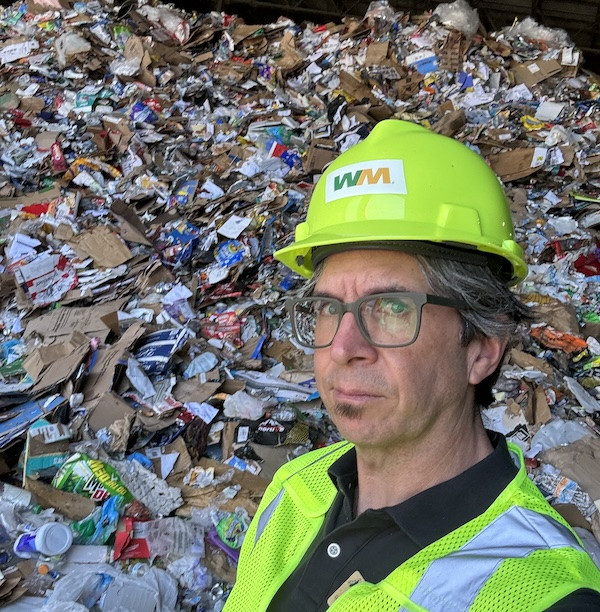
Once a week, as I roll my recycling cart from my backyard to the curb in front of my house, I ask myself: how much of what is in my big, blue bin actually gets recycled? Yes, the City’s Recycling webpage offers a short, bulleted list, but it is remarkably non-specific, especially regarding the wide variety of plastic packaging. Empty soda bottles are recycled, but what about the caps? The plastic clamshell salad containers I dutifully rinse out? Mildly greasy pizza boxes? Paper coffee cups?
Turns out I’m not alone in being confused. A 2019 national poll* found that, of the 85% of respondents who said they recycled, over half did not believe the items were actually being recycled. Many of the local green businesses I am working with to improve their recycling programs express similar confusion. People want to recycle. They are just really confused about what they can recycle.
Last month I had the chance to find out for myself when the City of Winston-Salem hosted a tour of Winston-Salem’s Materials Recovery Facility (MRF) for our Green Business Network members. I met eight GBN members in the lobby of the MRF, a nondescript edifice in an industrial park southwest of the city run by Waste Management, the private company contracted to handle the City’s residential recycling program. Our tour guide, MRF Manager Terry Feeney, gave us an overview of how the facility separated residents’ mixed recyclables into “streams” of paper and cardboard, plastic, glass, and metal, before leading us through the cavernous facility to see the process for ourselves. It was loud, and dusty, as chaotic piles of mixed recyclables were loaded onto belts and automatically sorted by the massive machines. MRF workers monitored the machines and pulled out non-recyclables by hand.
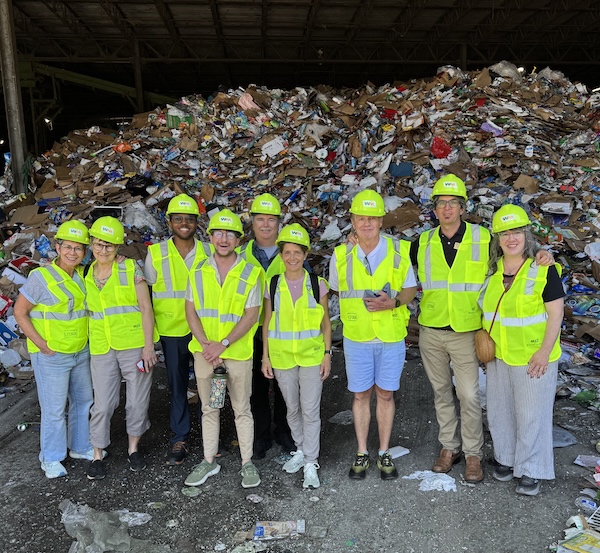 According to Terry, the MRF recycles approximately 75% of the materials they receive–a higher percentage than I expected. Most of the 25% that isn’t recycled is “recovered” materials–garden hoses, punctured inflatable pools, propane tanks, and, yes, dirty diapers–rather than “contaminated” recyclables, like half-filled soda bottles and overly-greasy pizza boxes. The biggest foe of the MRF, Terry lamented, is the plastic grocery bag. In 2012, the City opened the MRF and moved to single-stream recycling, where recyclables are mixed together in bins and separated at the facility. But many residents still separate their recyclables, often in plastic grocery bags. Winston’s MRF not only doesn't recycle these bags, but the bags can actually damage the machines.
In the end, I learned it’s not the numbered recycling symbol on packaging that determines what gets recycled, but what recycled materials a MRF like Waste Management can sell. The markets for these materials fluctuate and change. What is recyclable one day may not be the next. What is recycled also varies from state to state, even municipality to municipality. What is recycled in Greensboro might not be in Winston-Salem. Thus the confusion. Compounding the confusion locally, our City has scant funding, or personnel, to provide the necessary recycling education to the public.
So, while not exactly a practical solution to this problem, touring the MRF was a great way to get a better grasp of the City’s recycling process and what should (and shouldn’t) go into our big blue recycling bins. “This tour was an ey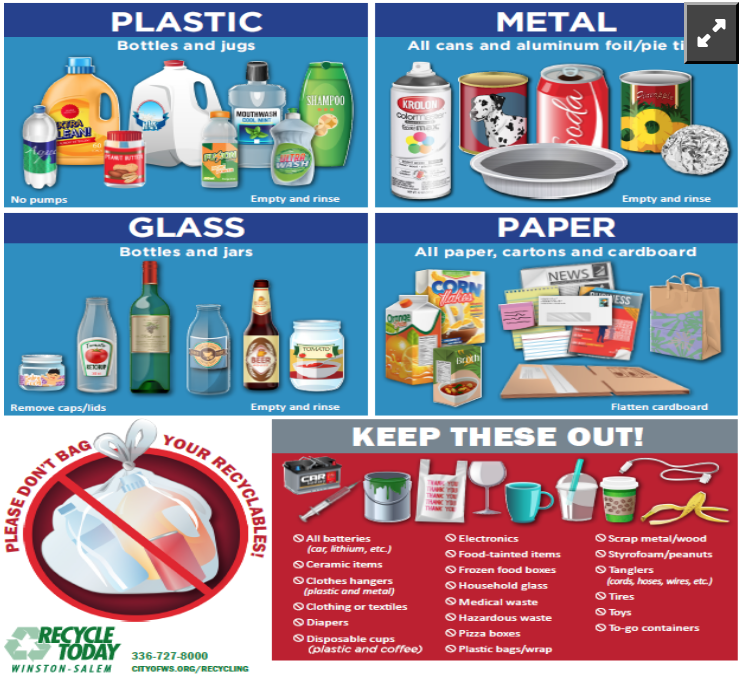 e-opening experience,” shared Alanna Meltzer-Holderfield, Assistant Director of MUSE Winston-Salem. “Our tour guide Terry dispelled many common recycling myths I had and I left the tour feeling pretty confident that what I put in my bin at home will get recycled at the MRF. I hope more people will take this tour.”
For now, I’ll leave you with these guidelines: if it is recyclable plastic (#1-7) and has a “neck”, rinse and recycle with the cap on. Otherwise, either reuse or toss. However, remove the metal lids off of glass jars and recycle the rinsed jars only. Coffee cup sleeves, as well as most paper, can be recycled. So can cardboard pizza boxes, if they aren't greasy (you can always rip off the uncontaminated part of the box and recycle it). And please, please, spare MRF workers from having to deal with your propane tanks, lightbulbs, and (eww) dirty diapers.