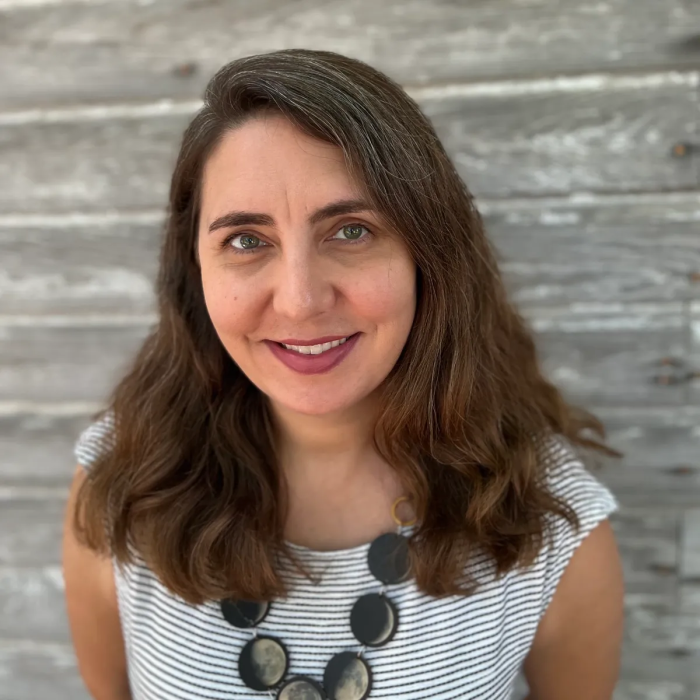
Caila Cater-Edwards, Clean Energy Intern for PEA, sat down with Dr. Alison Northup, the mind behind our new Green Business Network partner, Piedmont Plants Nursery. Dr. Northup’s green career journey began in Florida and Texas, but she now calls the Piedmont Triad her home. She has dedicated her studies and the Piedmont Plant Nursery to native species. And despite the threat of a proposed data center near the nursery, she remains steadfast in her mission to maintain an oasis for the local ecosystem and a peaceful sanctuary for the community.
Dr. Alison Northup, so glad to have a moment of your time and welcome to the Green Business Network! Piedmont Plant Nursery is a blooming business out in Rural Hall, specializing in native plants, however I know your roots began Florida, then spread from there to Texas. Can you share a little bit about your journey and how it brought you here to the Triad?
Hi Caila, thanks for reaching out to me. Growing up in Florida, it was pretty much always warm and full of thriving plants, and I loved investigating the plants in my yard.I really always loved plants and it was also an interest that my mother shared with me. But I guess you could say that I got serious about them when I moved to Austin, Texas to study Ecology at the University of Texas. Ecology is the most zoomed-out way to understand Biology. Rather than looking at the workings of cells or muscles or leaves, in Ecology, we look at interactions between different organisms or different species, as well as interactions between organisms and their environment. That is where my understanding of the roles of plants, insects and other animals in an ecosystem grew exponentially. Most of us learned in school that plants are the “primary producers”, turning the sun’s energy into food that the rest of the ecosystem can use. But they are also the structural foundation of the ecosystem - and additionally, there are many, many very specific interactions between insect species and the specific species of plants that they require to complete their life cycles. Each native plant species supports a group of native insects and maybe other types of species like birds or fungi that rely on that type of plant, and so you can’t just replace a plant that is native to our area with something that comes from Europe or Asia and expect it to provide anything close to the benefit to the ecosystem that a native plant provides. It doesn’t work like that.
I met my husband while in Austin - he’s actually an Ecologist too, but he studies animals rather than plants. We decided to move to North Carolina because this is where he is from and he has family here. But for the last two years of my PhD, I knew that I wanted to start a native plant nursery. I just felt that there is a lot of work to be done in the plant trade. I want to make native plants accessible to everyone.
I love the way you frame native plants as the foundation of our local food web, it makes the work you're doing feel even more essential for the Triad. Shifting from the 'software' of the ecosystem to the literal hardware, there has been a lot of community concern regarding the massive data center proposed for Rural Hall. These projects are notorious for their heavy footprint on land and energy, often leaving residents and farmers to deal with the fallout. With your nursery taking root right in this area, how do you see an industrial development of this scale impacting your mission and the local environment?"
I was devastated when I heard the news about a hyperscale data center possibly being built half a mile from Piedmont Plants Nursery. I carried that weight in my chest for days. We currently do get some construction noise from a nearby housing development (which is intermittent and which we expect to be temporary), but when that quiets down, the loudest sounds we get are birdsong, which we love to hear. I expect the noise from the data center to be a constant hum at about the volume of the birdsong, going on forever. There is a power line cut that connects our property to the data center property, and the sound will probably travel down that cut very easily. I’ve tried to design the nursery as a little oasis, surrounded by trees and butterfly gardens, and the soundscape is an important part of that. Long term, I was planning to hold events there, and we actually hosted our first wedding in March. So the nearby hyperscale data center changes my long term plan for the business, and there is some heart-ache that goes along with that.
From the community point of view, this type of construction going into the center of Rural Hall is a terrible idea. Within 1000 feet of the buildings, as drawn in the initial proposal, we have about 50 homes and six apartment buildings, as well as the Town Hall, an old church, a cemetery, and an active community garden. The government of the Town of Rural Hall has been working on projects to modernize the town and make it a better place to live. They are working on plans for a new public space next to the Town Hall, expanding our largest park, Covington Memorial Park, and creating a public space around our new Fire Station. All of these projects are close enough to be affected by the noise and light pollution from the data center.
And on top of all that, we have to worry about the energy and water use of the data center! I don’t have an estimate for how much energy it would use, but they hired a community liaison who told us that water use could be 600,000 gallons per day! It’s mind-boggling!
That is a heavy situation to carry, and the contrast between your "oasis" and a 24/7 industrial hum is stark. It’s one thing to deal with the temporary growing pains of a housing development, but quite another to face a permanent shift in the local soundscape, especially when you have such a vision to explore hosting community events. It seems like there is a major disconnect between the town’s goal of creating inviting public spaces and the reality of an industrial data center. Can you share if there has been any organized pushback from residents to ensure the Town Hall protects the very public spaces they are currently working so hard to build? Is there anything the readers can do to help prevent this from continuing?
I am happy to say that the town of Rural Hall has come together in a big way against this hyperscale data center. Yard signs have been printed; protests have occurred. One resident made a website that posts about action items and upcoming meetings. And there have been some meetings with the developer’s agent and with the government of Rural Hall that have reached room capacity and people had to be turned away. The Rural Hall Town Council initially took a neutral stance regarding the data center, but with popular opinion clearly against the project, they have since passed a resolution against the rezoning of land for the hyperscale data center. However, the final decision doesn’t lie with the government of Rural Hall but rather with the Forsyth County Board of Commissioners.
The zoning change hearing with the City/County Planning Board was initially scheduled for March but has been pushed back twice already. It will now take place in June at the earliest. So one challenge we have is to maintain public interest even while the official process is stalled. If anyone wants to help our cause, please check out the website linked above and follow the items in the “Take Action Now” section. Since the final decision rests with the Forsyth County government, anyone who lives in Forsyth County is encouraged to contact the Board of Commissioners with their concerns.