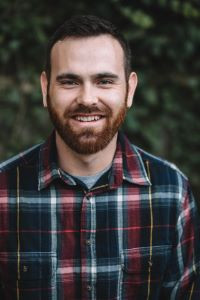
Richard Sebastian, Green Economy Program Coordinator at PEA, interviewing Myles Regier, Associate Dean for Engineering and Transportation at Forsyth Tech Community College’s Transportation Technology Center campus.
Richard Sebastian (RS), PEA: Hi there, Myles. We've talked briefly a number of times in the past, but I’m glad we have the chance to sit down and talk about your day to day work at FTCC’s Transportation Technology Center. You are the Associate Dean for Engineering and Transportation. Can you tell our readers a little about what it is you do in this role?
Myles Regier (MR), FTCC: Basically, I answer a lot of questions–from faculty, from students, and from outside organizations–about FTCC’s transportation programs. I also help with program development; recruit manufacturers to expand the offerings that we have at the transportation center to create more opportunities for the students; I help secure equipment, tools, and training aids for our courses; and work with the advisory boards for each of our programs.
I also work with other divisions to make the Transportation Technology facility as much of a one stop shop for students as possible. When you're a student at the transportation center, 98% of what you do is here at this campus. And I work with other universities and colleges. For example, FTCC’s race car program attracts students from out of state, so we partner with Winston Salem State University to arrange housing for these students. We also make sure the Wake Forest Demon Deacon’s motorcycle is ready to go.
RS: For anyone not familiar, what are some of the automotive programs offered here at FTCC Transportation Technology Center?
MR:
I like to say that if it has wheels and an engine, we have a program for it. The programs at our transportation 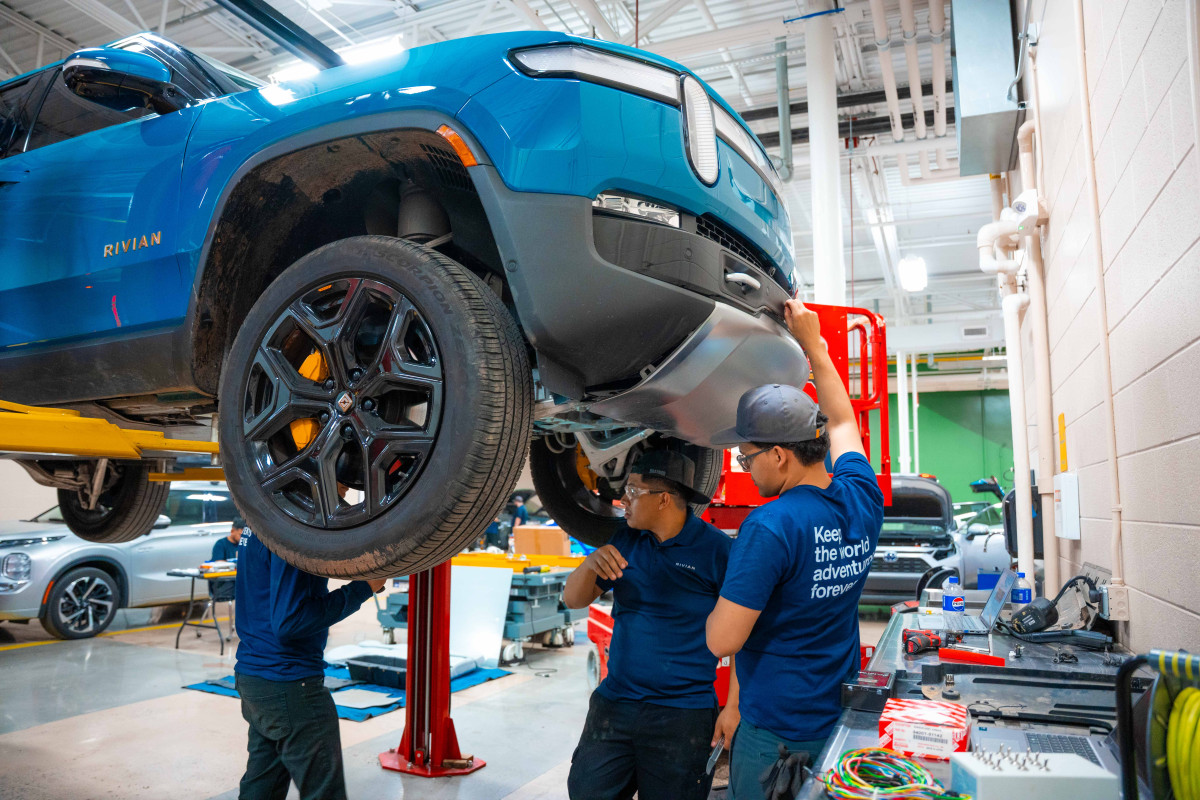 center are Collision and Refinishing Technology, Race Car Technology, Motorcycle Mechanics Technology, and Diesel and Heavy Equipment. We have a variety of automotive programs:
a general automotive program, covering multiple auto manufacturers–GM products, the Ford Ace program, the Hyundai Genesis program, and a bit of the Toyota and Lexus stuff as well. These programs offer degree pathways to an associate's degree, diploma, or certificate. And then there's the Toyota/Lexus T-TEN program, which
involves learning about hybrid and plug-in hybrid technology, and the Honda/Acura Professional Automotive Career Training (PACT) program, which we’re excited to kick off this semester. Both of these programs lead to an associate’s degree. Our Rivian Technical Trades Program is a little different. It is a 24-week paid internship program that culminates with a full-time offer to work at a Rivian service center. So it's kind of like on the job training.
The Rivian program is really cool because they are full EV vehicles, so students work on the trucks, SUVs, and the service vans, like the Amazon vehicles delivering your packages.
center are Collision and Refinishing Technology, Race Car Technology, Motorcycle Mechanics Technology, and Diesel and Heavy Equipment. We have a variety of automotive programs:
a general automotive program, covering multiple auto manufacturers–GM products, the Ford Ace program, the Hyundai Genesis program, and a bit of the Toyota and Lexus stuff as well. These programs offer degree pathways to an associate's degree, diploma, or certificate. And then there's the Toyota/Lexus T-TEN program, which
involves learning about hybrid and plug-in hybrid technology, and the Honda/Acura Professional Automotive Career Training (PACT) program, which we’re excited to kick off this semester. Both of these programs lead to an associate’s degree. Our Rivian Technical Trades Program is a little different. It is a 24-week paid internship program that culminates with a full-time offer to work at a Rivian service center. So it's kind of like on the job training.
The Rivian program is really cool because they are full EV vehicles, so students work on the trucks, SUVs, and the service vans, like the Amazon vehicles delivering your packages.
RS: It sounds like many of your programs are fairly unique to North Carolina, even to the Triad. How do your programs compare to those in other regions in North Carolina, or in the Southeast?
MR: We have several unique programs here that aren't offered in other areas. The Rivian program is the only one in North Carolina, and one of only 2 on the east coast. The Toyota T-TEN program covers a 3 state area. There is another Honda PACT program at another North Carolina community college, but not in our area of the state. Another thing that sets us apart at FTCC is our faculty. They have decades of experience in the industry, with different vehicle models, are all ASE Master Technicians, and all of them really care that our students are successful.
RS: I imagine the dramatic growth in the adoption of hybrid and electric vehicles has significantly changed the traditional automotive program. What percentage of your programs touch upon hybrids or full EVs, compared to internal combustion engines (ICE)?
MR: These days, most automotive programs are gonna be really electrical heavy, whether ICE, hybrid, or EV: there’s diagnostics, and troubleshooting. Electrical systems and advanced electrical system communications are embedded throughout the courses in our programs. Obviously with Rivian, that's like the whole name of the game there.
RS: So it sounds like, if you're interested in a career in automotive technology, you need training in both ICE technology as well as EVs, computers, and batteries. Have you seen a change in the type of students attracted to these programs?
MR: We have students from different backgrounds, but in general what they have most in common is a curiosity about how things work. We still get a lot of “car people”, with traditional mechanical aptitude. But in our industry today, you also have to be good with computers, so we now ask potential students, “Do you play computer games?” In the Rivian program, we have students coming from IT backgrounds who really like EV technology and want to dive into it and learn more about it. But curiosity is the number one trait that we're looking for. Because, really, regardless of the program or type of vehicle, as a student you're putting on a detective hat and doing lots of troubleshooting.
RS: Tell us a little bit about your career path to get to this position? Did you always want to be in education?
MR:
Higher education was not on my bingo card, and I definitely took a roundabout way to get here. I grew up on a farm in rural Nebraska, around heavy equipment, and knew I wanted to work on motorcycles, hot rods, and cars. I completed my undergraduate at McPherson College in Kansas, the only school in the nation where you can get a bachelor's degree in 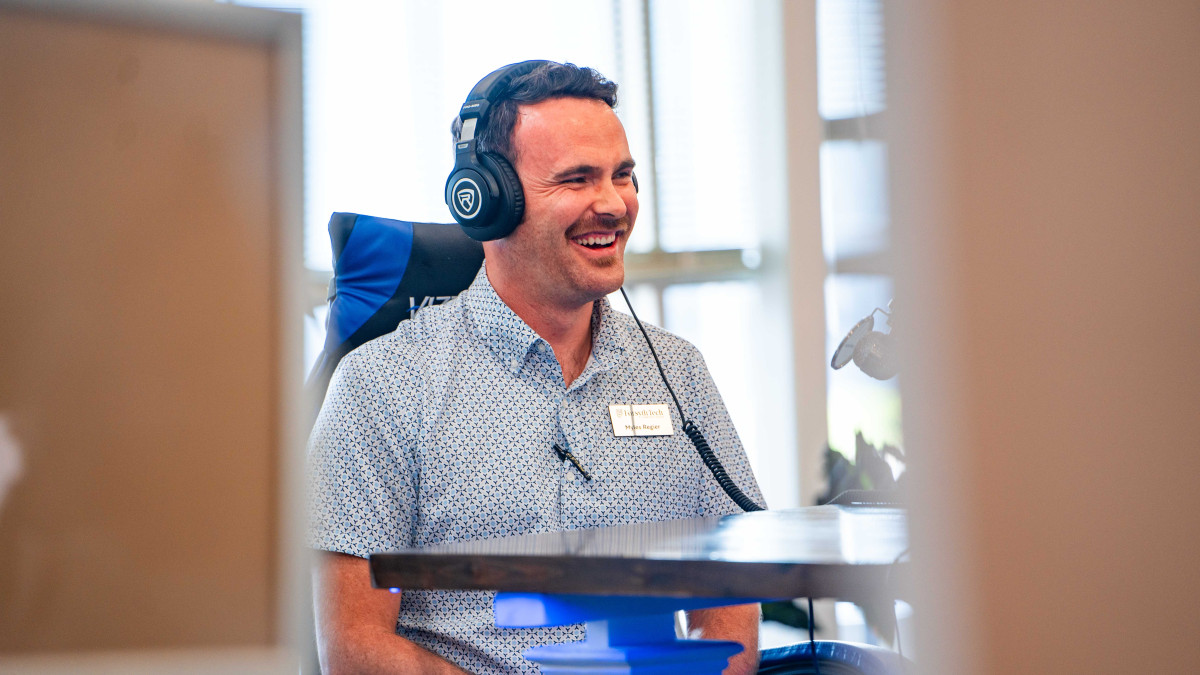 automotive restoration. Once I graduated, I went to the Motorcycle Mechanics Institute (MMI) in Phoenix, worked at a Harley-Davidson dealership while in school, and after a few years went back to working on classics cars in Tempe. I met my wife in Phoenix and after we got married, moved to North Carolina for her to complete her graduate degree, and I worked at a motorcycle shop. In 2017, I became an adjunct motorcycle instructor here at Forsyth Tech and ended up really liking it. I was promoted to the Motorcycle and Race Car Program Coordinator in 2020. At that time, EV and battery technology were really taking off, and after doing some research, I got connected with the local Light Electric Vehicle Association (LEVA). LEVA is an international organization, with a curriculum developed by a gentleman here in Winston. FTCC offered LEVA training in the Spring of 2025–about 16 hours or 20 hours of training, overall– and the students who completed it received an internationally-recognized credential.
RS: LEVA–does that include e-bikes?
MR: Yeah, e-bikes, e-scooters, golf carts, Segways, and drones all fit into that light electric vehicle category.
In 2022, I was promoted to the associate dean position that I'm in now, which is really cool because now I get to work with all of the current transportation programs as well as help develop new training for some of the emerging automotive technologies.
RS: Speaking of these emerging automotive technologies: which is the most exciting to you, or shows the most promise?
MR: The current battery technology is what gets me the most excited. There are these lithium compound batteries that have amazing output, and long shelf lives. Battery training is integrated into the programs themselves, especially the LEVA training course, because computer systems control the batteries, and communicate across the other systems.Our students need to understand how those things operate.
RS: Are there new programs that are in development at FTCC that you are excited to talk about?
MR: As far as stuff on our horizon, we are looking at other OEMs to include but I can't really say because they are currently in the works. But we have our eye on a few different manufacturers for the future. We want to continue to expand the training opportunities we offer at the Transportation Center. We want to continue to host the LEVA training class for the light electric vehicle community. Two years ago, we had a 30,000 square foot addition built onto our existing building, which gave us another 10 automotive bays, split between Rivian and Honda, more than doubled our diesel lab space, and added a couple more classrooms. That growth has been really exciting to see.
RS: Do you see the demand for EVs and hybrids growing?
MR: Yes, there are more hybrids, more EVs, and more students needing training to work on those. The federal tax incentives went away last year, and there was a slight dip in sales because of that. But with gas prices where they are now there is still a strong marketplace for these vehicles. But even with ICE vehicles, so much is computerized. A modern car has at least like 5 computers on it now, and they all have to talk to each other. These skills translate to hybrids and plug-in hybrids as well.
RS: When do you think EVs and hybrids will fully replace ICE vehicles?
MR: As far as the industry itself shifting to EVs, I think there'll be a place for ICE vehicles for the foreseeable future, but the market share for EVs, hybrids, and plug-in hybrids are going to continue to grow. EVs are not going away by any means. Personally, I really like hybrid technology. I think it's wonderful. It's just that great mixture of both.
RS: As you know, here in Winston-Salem we have a historic and very popular racing venue called Bowman Grey stadium. Will we ever see some electric motorcycle or EV racing there?
MR: That's a great question. I may not be the best person to answer that question because I love loud engines. I've been going to races since I was 4 or 5 years old, so a big part of car racing for me is the sound. But EV racing series are popping up everywhere. There is talk that NASCAR has been thinking about a hybrid transition in the future. As for sustainable fuels, a lot of the major racing series are using ethanol fuels or different renewable sources for their fuel.
RS: You will be at our Green Job Fair to talk to job seekers looking to learn more about the Rivian and other automotive tech programs at FTCC. Can you share some of the advice you’ll give them about the career opportunities in this field?
MR: Well, first I’ll tell them that these careers pay really well. You can make a really good living working as an automotive technician. Within a year or 2 after graduating from some of our programs, a student can be making close to $80,000 a year. Also, you are not stuck behind a desk and get to work on a variety of different things day to day. And they're fun careers.
RS: Finally, which of your programs can attendees learn about at the Green Job Fair?
MR: We definitely want to highlight our Toyota T-TEN program, the Rivian program, and the Honda PACT program because there are a lot of those green technologies highlighted within those programs. There will also be some other FTCC programs that have sustainable or green technologies, or career paths in that sector. We're really excited to talk to potential students and job-seekers about the career paths within those programs, and what it looks like to get into that workforce.
RS: Thanks for your time today, and for all your great work developing and supporting these green automotive programs. I guess I’ll see you at our Green Job Fair on September 24th?
MR: Thank you for the opportunity Richard! Yes, see you on the 24th!